
In some regions, companies may benefit from tax deductions related to interest payments on debt. A higher D/E ratio could be seen as beneficial in such cases, as the debt is tax-deductible. The D/E ratio is often compared to industry averages, but these averages can vary significantly between industries. Conversely, companies with poor credit ratings may find borrowing more expensive, and they may avoid accumulating too much debt for fear of higher interest rates and loan rejection.
Key Differences Between Debt Ratio and D/E
Investopedia says total debt is vital for a company’s financial health. Let’s explore the main parts of total debt to grasp the debt to equity ratio better. You just divide a company’s turbotax® official site 2020 total liabilities by its total shareholders’ equity. By understanding the debt to equity formula and what a good D/E ratio is, investors can better judge a company’s financial health and risk.
Without considering liquidity, the ratio may not give a complete picture of a company’s financial health or ability to manage debt in the short term. With such tools, businesses can make data-driven decisions to optimize their capital structure and sustain long-term growth. The main use of the debt-to-equity ratio is to determine the financial leverage and risk of a company. It displays the ratio of the value represented in shareholders’ equity to the quantity of debt a company employs to finance its assets.
However, these balance sheet items might include elements that are not traditionally classified as debt or equity, such as loans or assets. A debt-to-equity ratio is considered high when a company has significantly more liabilities than shareholder’s equity. This high leverage ratio suggests that the primary source of funding for a company’s operations is debt, rather than shareholder equity. The example image shows the debt-to-equity ratio for Reliance Industries being highlighted in the Strike app. Here, this ratio below 1 indicates more reliance on equity financing than debt financing.
- In this context, Company Y’s debt-to-equity ratio of 0.8 could be considered relatively high, indicating a higher reliance on debt financing compared to its industry peers.
- Returns could be substantially increased by wisely employing borrowed funds.
- It helps investors and analysts see a company’s financial health and risk.
- This can reduce the overall debt level on the balance sheet and improve the D/E ratio.
- Monitoring the ratio over time helps identify trends in financial stability and risk management.
What are gearing ratios and how does the D/E ratio fit in?
Debt to equity ratio is calculated by dividing total liabilities by stockholder’s equity. Suppose a company carries $200 million in total debt and $100 million in shareholders’ equity per its balance sheet. The formula for calculating the debt-to-equity ratio (D/E) is equal to the total debt divided by total shareholders equity.
Calculate Debt Equity Ratio In Excel
Different normal leverage ranges are maintained by various industries in accordance with their asset requirements and business models. Based on factors such as industry and business model, companies exhibit substantial variation in their leverage strategies. Even so, an investor sometimes compares companies within the same industry to ascertain whether they have a capital structure that is sustainable or hazardous. Total Liabilities are the total amount of short-term and long-term debt obligations of a company. Economic conditions greatly affect D/E ratios and a company’s financial health. In economic growth, companies might take on more debt, raising D/E ratios.
Other ratios used for measuring financial leverage include interest coverage ratio, debt to assets ratio, debt to EBITDA ratio, and debt to capital ratio. A high debt to equity ratio means that the company is highly leveraged, which in turn puts it at a higher risk of bankruptcy in the event of a decline in business or an economic downturn. The D/E ratio focuses strictly on debt as a source of financing, ignoring other methods such as leasing, equity financing, or grant funding. These alternative financing methods may reduce the need for traditional debt and can affect the company’s financial structure and risk profile, but the D/E ratio does not capture their impact. The main limitation of debt to equity ratio is that it is difficult to compare across industries.
On the other hand, the consumer goods industry is typically less capital-intensive, and companies in this sector may have lower debt-to-equity ratios. In this context, Company Y’s debt-to-equity ratio of 0.8 could be considered relatively high, indicating a higher reliance on debt financing compared to its industry peers. The numerator in above formula consists of total current and long-term liabilities and the denominator consists of total stockholders’ equity, including preferred stock, if any.
When we look at the d/e ratio results, it’s key to think about the company’s industry and financial health. A high d/e ratio might show a company is at risk of financial trouble. On the other hand, a low d/e ratio could mean the company isn’t using debt well. Equity represents the ownership interest in a company, while debt represents the borrowed funds that the company must repay over time.
- This means that for every dollar in equity, the firm has 42 cents in leverage.
- The stage of growth that a company is in plays a key role in determining its D/E ratio.
- A company’s ability to adjust to changing circumstances is influenced by its D/E ratio.
- The D/E ratio does not take into account a company’s profitability or ability to generate income from its assets.
- The nature of the baking business is to take customer deposits, which are liabilities, on the company’s balance sheet.
Cost of Capital
The ideal ratio depends on each company’s specific risk profile, capital structure, and industry dynamics. Company B’s debt-to-equity ratio of 0.125 indicates that it has £0.125 of debt for every £1 of equity. This relatively low ratio suggests that Company B is not heavily leveraged and relies more on equity financing. A debt to equity ratio analysis shows the proportion of debt and shareholders’ equity in the business’s capital structure.
These can include industry averages, the S&P 500 average, or the D/E ratio of a competitor. As you can see from the above example, it’s difficult to determine whether a D/E ratio is “good” without looking at it in context. It’s clear that Restoration Hardware relies on debt to fund its operations to a much greater extent than Ethan Allen, though this is not necessarily a bad thing. This means that for every dollar in equity, the firm has 76 cents in debt.
Why D/E Ratio Matters in Financial Analysis
A high debt to equity ratio means that a company is highly dependent on debt to finance its growth. If a company holds valuable but non-essential assets, selling them could generate cash to pay down debt, thereby improving the D/E ratio. This can also help streamline operations by removing unnecessary assets from the balance sheet. Debt restructuring can help lower the interest burden and lengthen repayment periods, making debt more manageable.
]]>
Your nonprofit’s mission is too important to waste time struggling with accounting software that wasn’t designed for you. QuickBooks, spreadsheets, and generic tools create unnecessary workarounds, compliance risks, and reporting headaches. FastFund was built specifically for nonprofits—with true fund accounting, easily track restricted and unrestricted funds, automated grant tracking, and FASB-compliant reporting right out of the accounting services for nonprofit organizations box. Stop forcing your organization to fit into software that doesn’t understand your needs.

Essential elements of nonprofit accounting
Thankfully, you can rely on specialized software to make fund accounting much simpler. One of the most nuanced challenges in nonprofit accounting is the art of cost allocation. Determining how to distribute these expenses equally becomes a complex puzzle when multiple programs share staff, space, and resources.
- Board members bring varying financial expertise, yet all need to understand the organization’s financial position well enough to fulfill their fiduciary responsibilities.
- These funds cannot be used for general operating expenses or other programs unless the donor explicitly allows it.
- For example, if you spent $50,000 on fundraising and brought in $500,000, that’s 10 cents to raise each dollar.
- By presenting a clear and detailed account of functional expenses, nonprofits can build trust with their supporters and increase their chances of securing ongoing financial support.
- The original donation (called the principal) is invested, and the organisation can only spend its income.
Think about your annual reporting

They provide an objective assessment of financial statements, ensuring accuracy and compliance with regulatory requirements. This transparency not only builds trust with stakeholders but also enhances the organizationâ?? In navigating the complexities of nonprofit accounting, organizations must prioritize their accountability to donors and stakeholders over traditional profit-driven metrics. This involves implementing fund accounting, which allows nonprofits to manage resources according to specific restrictions tied to donor contributions. By doing so, nonprofits can effectively align their financial practices with their overarching mission and goals. Another complexity arises from the diverse sources of revenue that nonprofits typically manage, including grants, donations, and fundraising activities.
Agency Funds

A statement of cash flows is a financial statement that provides information about a nonprofit organization’s cash receipts and payments. It helps to illustrate how cash flows in an organization and cash balance changes over time. The point of this statement is to help determine whether or not the organization meets its goals or has enough funds to support its programs.

Can a for-profit business use fund accounting?
With limited financial resources, organizations must prioritize spending while effectively managing operational costs. Moreover, as nonprofits often operate with limited resources, mastering accounting practices can lead to better resource allocation and program effectiveness. By implementing sound accounting practices, nonprofits can ensure they meet their financial obligations while maximizing their impact. This introduction sets the stage for exploring the essential elements of nonprofit accounting and the strategies to navigate its complexities effectively. Various organizations can implement a fund accounting system, but it’s most common in government entities and nonprofits.
- Fund accounting has to follow specific principles and procedures to ensure accuracy and reliability.
- Regular reconciliation catches problems while they’re still small and manageable.
- Even small mistakes can have big consequences—like losing your 501(c)(3) status or damaging your organization’s reputation.
- S assets, liabilities, revenues, and expenses, allowing stakeholders to assess its financial stability.
- Nonprofit accounting is a specialized method of tracking finances, emphasizing accountability and mission impact over profits.
- Luckily, there is fund accounting software made specifically for nonprofits, and it can make handling these things much easier.
Key financial statements for nonprofits
One of the most commonly used dedicated accounting solutions for nonprofits is the Intuit QuickBooks suite. Luckily, the Jitasa team members are QuickBooks experts and have helped many organizations configure this platform to meet nonprofit https://greatercollinwood.org/main-benefits-of-accounting-services-for-nonprofit-organizations/ needs rather than business needs as it was originally designed. You’ve probably heard that you shouldn’t put all of your eggs in one basket when it comes to nonprofit revenue generation. While revenue diversification mostly falls under the financial strategy umbrella, it also touches the analysis and reporting aspects of accounting.
Separation of funds
It is an accounting method used by nonprofit organizations, churches, and other charitable organizations to ensure the proper allocation of funds. Nonprofit bookkeepers use fund accounting to focus on accountability for their nonprofit instead of profitability. When donors give money to your organization, with the stipulation that your organization use the money for a specific purpose, you can’t use that money for anything other than that purpose. One of the best ways to ensure your organization’s accounting is held to a high standard is by using software that’s specifically designed for nonprofits. It’s a good idea to make use of nonprofit accounting software, which comes built-in with the features you need to keep your nonprofit’s accounting on track. These features include nonprofit reporting, GAAP compliance, and simplified tax filing for organizations.
- Whether you’re new to the nonprofit world or are a seasoned fundraiser looking to change up your accounting style, proper fund accounting can feel like a daunting practice to take up.
- It’s like having a dedicated financial expert who understands the basics of fund accounting.
- First, create a detailed chart of accounts that reflects your nonprofit’s diverse funding sources and expenses.
- In order to record the expenses that use funds from a grant, you’ll need to create an expense category specific for cash and cash equivalents.
- This step often includes a review by stakeholders or auditors to ensure everything is in order.
- For effective financial management, both roles should work together seamlessly.
- Many nonprofits attach their financial statements as appendices to their annual reports so supporters who want to learn more about their financial situations can easily dig deeper.
Using online software can simplify the process by automating various tasks and streamlining workflows. It uses accrual accounting, and each stream of funding has a distinct code in the ledger to identify it, such as grants, donations, and government contracts. Government and nonprofit financial statements can typically be found on the organization’s website or you can call them and request a copy.
]]>While accrued expenses focus on costs incurred but not yet paid, other financial concepts deal with different aspects of timing and recognition in accounting. An accrued expense is a cost that a company has incurred but hasn’t yet paid for. Reversing entries are a simple but powerful tool to prevent double-counting expenses. They essentially “undo” the initial accrual entry at the start of the next accounting period. This makes it easier to record the actual cash outflow when the payment occurs, keeping your books clean and accurate.
We will now look at some of the key components that make up accrual accounting. By staying attentive and employing efficient approaches, you’ll be better prepared to handle the various aspects of financial management. This diligence will help establish a solid financial base for your business, setting you up for long-term success. In this example, the salary expense accrued on December 31st gets reversed on January 1st, so you don’t end up counting it twice when the payment is made.
The Internal Revenue Code (IRC) Section 162 allows these expenses as deductions if they are ordinary and necessary for business operations. An accrued expense is a concept in accrual accounting where expenses are recorded in the books of accounts irrespective of payments being made. Typical accrued expenses include salaries, wages, goods, and services consumed but prices not paid for them. The debt-to-equity ratio is an important measure of a company’s financial structure and can impact its ability to obtain additional financing. By recognizing and properly accounting for accrued expenses, businesses can present a more realistic picture of their financial position and performance.
If you take steps, learning how to accrue expenses with journal entries is simple. It means you need to recognize that interest on a monthly basis, even though the actual payment is made sometime in the future. Ramp can help reduce missed accruals by automatically flagging transactions that match known vendor patterns or account codes, especially for recurring professional services. With suggested rules and bulk editing, finance teams can stay on top of period-end adjustments without slowing down the close. Delays in accruing professional services are a key reason mid-sized firms miss internal reporting deadlines at month-end and quarter-end.
- Therefore, we can basically define the accrued expenses as the liability which results from the goods or services that have been received; however, the payment has not been made.
- Delays in accruing professional services are a key reason mid-sized firms miss internal reporting deadlines at month-end and quarter-end.
- By tapping into the benefits of accrual accounting, companies can get better insights into their financial health and make more informed decisions.
- We will also look at real-world applications and industry-specific considerations to help you understand how this accounting method plays out in practice.
- It also allows for the recognition of deferred revenue as a liability, which is gradually recognized as earned income over the contract period.
Understanding the Matching Principle
- When a company incurs expenses while the payment has not been made, such expenses shall be recorded as accruals.
- Software can automate many of the manual processes involved in tracking and reporting these expenses, reducing the risk of human error.
- This creates a false sense of security and can lead to unsustainable business practices.
- This, in turn, allows for better financial analysis and more strategic planning.
The company makes this journal entry to recognize the incurred expense as well as the obligation existed at the end of the period. Likewise, this journal entry increases both the expense (debit) in the income statement and the liability (credit) in the balance sheet. They represent costs incurred but not yet paid, which are typically positive amounts.
Understanding Reversing Entries
This nuance is important for maintaining accurate financial records and ensuring your financial statements reflect your business’s true financial position. And for help managing your expenses and ensuring accurate reporting, consider FinOptimal’s managed accounting services. Think of reversing entries as a cleanup crew for your accrued expenses. When you accrue an expense, you’re recognizing it before you’ve actually paid it. This is important for matching your revenue and expenses in the correct accounting period.
The company signs a $60,000 contract in November to obtain legal counsel services over six months, beginning immediately. The company pays the full amount at the end of the contract when the terms are satisfied. Cash basis accounting recognizes revenues and expenses only when cash is exchanged. It is simpler and more intuitive, often used by small businesses and sole proprietors. The business interest expense is a crucial factor in financial planning and cash flow management. At FinOptimal, we recognize the importance of such foundational accounting principles.
A well-maintained accrued expenses journal provides an at-a-glance view of outstanding obligations, which is key for accurate financial analysis. Accrued expenses are a cornerstone of accurate financial reporting, enabling businesses to present a true picture of their financial health. This practice not only aligns with the accrual accounting method but also aids in effective cash flow management and strategic planning.
How Accrued Expenses Affect Your Financial Statements
A material error or omission in your financial statements could mislead investors and have serious consequences. This means doing adjusting journal entries, mainly for accruals and prepayments. Recording accrued expenses requires precision and an understanding of financial principles.
Regulatory Reporting Requirements
This allows for proactive cash flow management, helping you anticipate potential shortfalls and plan accordingly. For example, knowing you have $5,000 in accrued wages payable next month lets you factor that into your cash flow forecast and ensure sufficient funds. This proactive approach helps avoid cash crunches and keeps your business operations flowing smoothly. By using these examples, it’s easier to see how accrued expenses play into everyday business operations and why they’re vital for maintaining accurate financial records. Accrued expenses appear as liabilities on the company’s balance sheet and reduce net income on the income statement.
Discover the essentials of accrued expense journal entry. Learn definitions, recording methods, and management tips.
Explore FinOptimal’s Accruer software for a solution designed to streamline these processes. Accrual accounting is more work than the cash method, where you only record expenses when you pay them. But it’s worth it because it gives a more accurate view of the company’s financial health. Why might consistently high accrued expenses be a concern for a business?
He has worked as an accountant and consultant for more than 25 years and has built financial models for all types of industries. He has been the CFO or controller of both small and medium sized companies and has run small businesses of his own. He has been a manager and an auditor with Deloitte, a big 4 accountancy firm, and holds a degree from Loughborough University. At the end of 31 March 20X9, ABC Co has incurred an interest expense on its bank loan for $500. However, based on the loan amortization schedule, the due date of the payment on both principal and interest accrued expense journal entry is on 03 April 20X9.
Accrued expenses appear as current liabilities on a company’s balance sheet. Including these expenses provides a more complete picture of the company’s financial position, accurately reflecting all outstanding debts, even those not yet invoiced. This ensures stakeholders understand the company’s true liabilities. For support managing your balance sheet, explore FinOptimal’s managed accounting services.
Let’s briefly define a few other related accounting concepts that are important to understand in the context of accrued expenses. These terms will give you a more well-rounded understanding of financial record-keeping. Software like Accruer can handle the complexities of reversing entries, allowing you to focus on other important tasks. You use electricity throughout December but don’t receive the bill until January. The cost of electricity consumed in December should be recorded as an accrued expense to accurately portray your company’s utility costs within that month. According to the accrual concept of accounting, expenses are recognized when incurred regardless of when paid.
]]>
This means you might need to reduce the time it takes for your customers to pay back for the product they purchased before they make a new purchase. You can also benefit from a smaller inventory cycle, which means you might need to shrink the time between raw materials entering your business and the final product being sold to a customer. This means that it would take a retailer an entire year to sell its inventory. Depending on the industry, this kind of an inventory turn might be unacceptable. If a company is able to keep a short operating cycle, its cash flow will consistent and the company won’t have problems paying current liabilities. The post-closing trial balance is prepared after the closing entries have been posted to the general ledger.

Measuring Efficiency
If depreciation adjustments are not recorded, assets on the balance sheet would operating cycle formula be overstated. Additionally, expenses would be understated on the income statement causing net income to be overstated. If net income is overstated, retained earnings on the balance sheet would also be overstated. The operating cycle is instrumental in determining a company’s working capital requirements. Working capital refers to the funds needed to cover day-to-day operational expenses, such as rent, salaries, and raw material purchases.
Positive Cash Flow vs. Negative Cash Flow
If the adjustment was not recorded, assets on the balance sheet would be understated by $400 and revenues would be understated by the same amount on the income statement. If the adjustment was not recorded, assets on the balance sheet would be overstated by $200 and expenses would be understated by the same amount on the income statement. To review, a cost is recorded as an asset if it will be incurred in producing revenue in future accounting periods. A cost is recorded as an expense if it will be used or consumed during the current period to earn revenue. This distinction between types of cost outlays is illustrated in Figure 3.3.
How to calculate the Operating Cycle?
The accounts receivable collection period represents the average number of days it takes for a company to collect payment from its customers after a sale has been made. It provides insights into the effectiveness of a company’s credit and collection policies, as well as its ability to manage outstanding receivables. The adjusted trial balance is prepared using the account balances in the general ledger after adjusting entries have been posted. A longer operating cycle may indicate potential issues, such as excessive working capital, inefficient inventory management, slow payment collection, or delayed payment to suppliers.
It’s important as it provides insights into a company’s liquidity, efficiency, and working capital management. The https://www.bookstime.com/ ‘inventory period’ measures how many days on average the inventory remains in the system before it’s sold. The ‘accounts receivable period’ is the average number of days it takes for a firm to collect cash from its customers after a sale has been made. An operating cycle refers to the number of days it takes for a company to convert its investment in inventory, accounts receivable (A/R), and accounts payable (A/P) into cash.
What Is the Operating Cycle and How to Calculate it? Unlock Your Business’s Financial Health
When the income summary is closed to retained earnings in the third closing entry, the $2,057 credit balance in the income summary account is transferred into retained earnings as shown in Figure 3.12. After entries 1 and 2 above are posted to the Income Summary account, the balance in the income summary must be compared to the net income/loss reported on the income statement. If the how is sales tax calculated income summary balance does not match the net income/loss reported on the income statement, the revenues and/or expenses were not closed correctly.
- By analyzing the operating cycle, businesses can gain insights into their efficiency, cash flow management, and overall financial health.
- Initially, the concept of crediting Accumulated Depreciation may be confusing because of how we learned to adjust prepaids (debit an expense and credit the prepaid).
- This adjusting entry enables BDCC to include the interest expense on the January income statement even though the payment has not yet been made.
- This means that, on average, it takes approximately 48.67 days for the company to pay its suppliers for the goods and services it has purchased.
- There are a few reasons why calculating this formula can benefit your business.

LO1 – Explain how the timeliness, matching, and recognition GAAP require the recording of adjusting entries. Having less account receivables can also better many other ratios for the business, which are important for investors who may want to provide money for funds. Any negative effects from your operating cycle on other aspects of your business may reflect badly on your business’s future profitability.

On the other hand, a longer operating cycle might hint at potential issues that require attention. Perhaps the company has surplus inventory or is not effective in collecting payments from its customers. For example, an efficient sales force can increase the company’s market share and reduce the time it takes to acquire new customers. This, in turn, helps you determine how much time and resources need to be allocated to collecting bad debt.
Operating Cycle Formula: The Only Guide You’ll Need!
For example, a $50,000 truck that is expected to be used by a business for 4 years will have its cost spread over 4 years. After 4 years, the asset will likely be sold (journal entries related to the sale of plant and equipment assets are discussed in Chapter 8). The cost less estimated residual value is the total depreciable cost of the asset. The straight-line method allocates the depreciable cost equally over the asset’s estimated useful life. Instead, a contra account called accumulated depreciation must be credited.
]]>
We see that total fixed costs remain unchanged, but the average fixed cost per unit goes up and down with the number of boats produced. As more units are produced, the fixed costs are spread out over more units, making the fixed cost per unit fall. Likewise, as fewer boats are manufactured, the average fixed costs per unit rises. Distinguishing between fixed and variable costs is critical because the total cost is the sum of all fixed costs (the total fixed costs) and all variable costs (the total variable costs). We are really well exposed to the concept of variable costs that change in the same proportion as the activity level increases. For example, if the activity level increases by 20%, the variable cost increases by 20%.
- Many prisons and jails analyze step costs based on annual prisoner cohort numbers.
- As supply and demand changes, a flight of stairs is a good visual representation of step variable cost.
- Both of these costs could potentially be postponed temporarily, but the company would probably incur negative effects if the costs were permanently eliminated.
- This concept is crucial for budgeting, pricing, and decision-making, as it highlights the impact of reaching certain production or activity levels on overall costs.
- To that end, it requires to deploy additional machinery, personnel and plant as an additional cost per year.
Examples
The revenue generated from only 50 additional units from that machine, however, is only $1,000. Exceeding the threshold (1,000 units) in this case, the step cost ($5,000) would be higher than the revenue generated ($1,000), causing the company to lose profits. With pricing for accounting software Quickbooks, for example, your costs can increase or decrease based on the number of user accounts needed. For the Essentials Plan of $30 per month, you can create up to three user accounts. The $30 cost remains constant whether you create just one user account or three.
What does stepped cost mean?
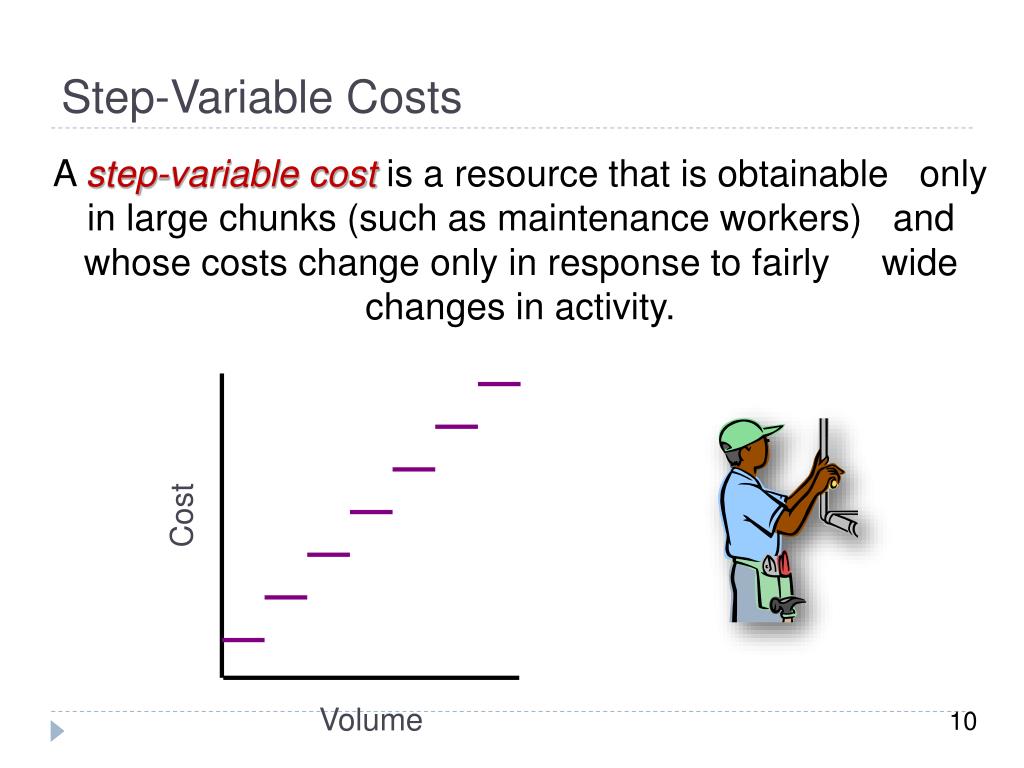
Other examples of step costs for companies include salaries and benefits, which remain a constant cost until a single sharp increase. As supply and demand changes, a flight of stairs is a good visual representation of step variable cost. As per the applicable threshold, the step cost for 18,000 units is $20,000 since the activity level lies in the last threshold of 15,001-20,000 units. However, how much does turbotax cost prices this cost can be converted to a true variable cost by paying employees a fixed amount for each pencil they make, instead of a fixed wage. For example, if the employee is paid 10 cents for each pencil he or she makes, the labor cost is now a true variable cost. The Ocean Breeze is located in a resort area where the county assesses an occupancy tax that has both a fixed and a variable component.
Step Costs: Definition, Significance, and Examples
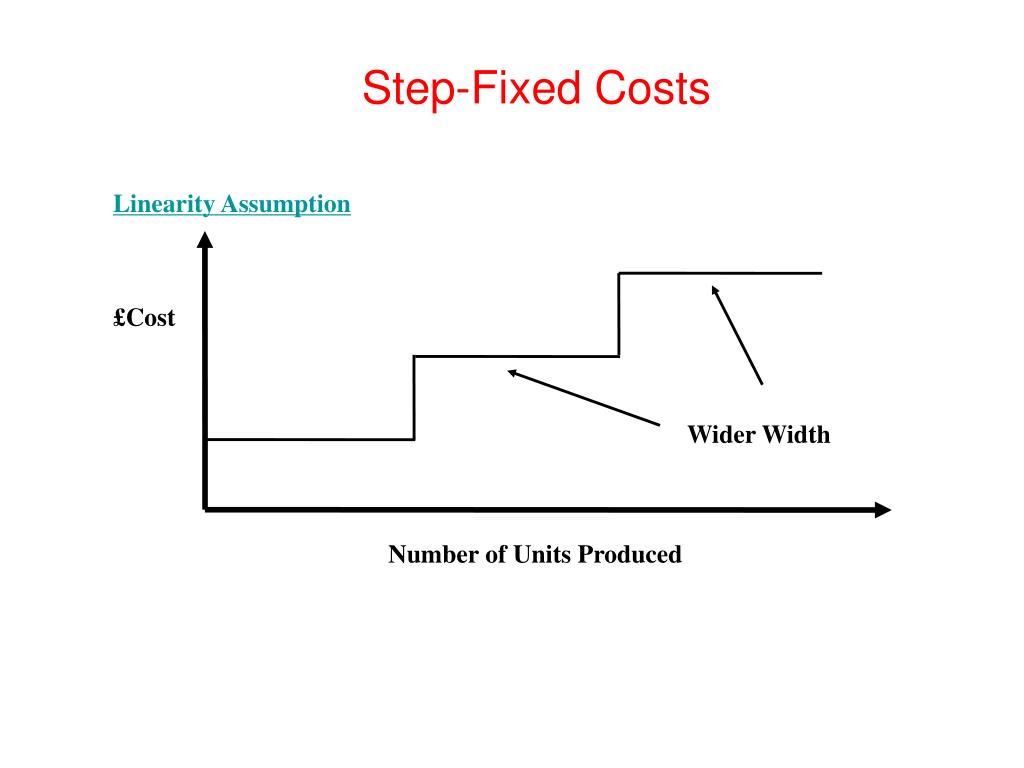
Many costs do not vary in a strictly linearrelationship with volume. The point at which a step cost will be incurred can be delayed by implementing production efficiencies, which increase the number of units that can be produced with the existing production configuration. Another option is to offer overtime to employees, so that the company can produce more units without hiring additional full-time staff. Step costs are expenses that remain constant for a range of workload.
Strategic Cost Management
Understanding these cost behaviors is crucial for the catering business owner when pricing their services, negotiating with clients, or determining profitability for different event sizes. Conversely, a truly variable cost will vary continually and directly in concert with the level of activity. This example mentions the cost relating to various activity levels (i.e., units produced). Suppose the company is operating at a production capacity of 18,000 units.
Spring Break Trip Planning
The third major classification of product costs for a manufacturing business is overhead. These overhead costs are not directly attributable to a specific unit of production, but they are incurred to support the production of goods. Some of the items included in manufacturing overhead include supervisor salaries, depreciation on the factory, maintenance, insurance, and utilities. It is important to note that manufacturing overhead does not include any of the selling or administrative functions of a business. It requires the application of labor to the raw materials and component parts.
Fixed costs remain constant (in total) over somerelevant range of output. Depreciation, insurance, property taxes,and administrative salaries are examples of fixed costs. Recallthat so-called fixed costs are fixed in the short run but notnecessarily in the long run. These expenses are fixed for a certain range of activity, but will increase or decrease beyond a certain threshold level. Step cost (or stepped cost) reflects the behavior of the total cost of an operation/ activity at various levels. Given the importance of step costs to the profitability of a business, it makes sense to clearly identify the activity levels at which these costs will be incurred.
For the past 52 years, Harold Averkamp (CPA, MBA) hasworked as an accounting supervisor, manager, consultant, university instructor, and innovator in teaching accounting online. For the past 52 years, Harold Averkamp (CPA, MBA) has worked as an accounting supervisor, manager, consultant, university instructor, and innovator in teaching accounting online. The owner eventually decides to hire a second cashier due to the shop’s additional customer flow. Although business hasn’t doubled, the bakery shop now has two cashiers. A bakery shop can serve up to 20 customers per hour with one cashier.
]]>Fixed Cost vs. Variable Cost
CFI is the global institution behind the financial modeling and valuation analyst FMVA® Designation. CFI is on a mission to enable anyone to be a great financial analyst and have a great career path. In order to help you advance your career, CFI has compiled many resources to assist you along the path. The following are the disadvantages of the contribution margin analysis. Thus, to arrive at the net sales of your business, you need to use the following formula. One packet of whole wheat bread requires $2 worth of raw material.
You might think calculating contribution margin is straightforward, but plenty of business owners trip up on the basics. Misclassifying costs as fixed when they’re actually variable, or vice versa. You could be looking at completely wrong numbers without realizing it. It’s easy to confuse contribution margin with gross profit—they both deal with revenue and costs, after all.
Regardless of how much it is used and how many units are sold, its cost remains the same. However, these fixed costs become a smaller percentage of each unit’s cost as the number of units sold increases. The contribution margin is 40% which means 40% of the total net sales revenue generated during the year is available to cover all fixed expenses as well as generate profit for the business. The contribution margin is affected by the variable costs of producing a product and the product’s selling price.
Because it tells you more about your business’s financial health than almost any other metric. You don’t need a finance degree to calculate contribution margin. With just a few numbers, you can unlock powerful insights into your business performance. Here, we are calculating the contribution margin on a per-unit basis, but the same values would be obtained if we had used the total figures instead.
Contribution Margin FAQs: Expert Answers to Boost Your Business Knowledge
Your variable cost per unit (materials, labor, shipping) totals $20. Understanding both the dollar figure and percentage helps you see how efficiently your business is operating. A higher contribution margin means more of your revenue is being directed toward profits, which is crucial for long-term growth.
Common Variable Costs in Retail and Manufacturing
If the contribution margin for an ink pen is higher than that of a ball pen, the former will be given production preference owing to its higher profitability potential. The contribution margin can help company management select from among several possible products that compete to use the same set of manufacturing resources. Say that a company has a pen-manufacturing machine that is capable of producing both ink pens and the difference between depreciation on the income statement and balance sheet ball-point pens, and management must make a choice to produce only one of them. In general, the higher the contribution margin ratio, the better.
Think rent, insurance, salaries (not tied to output), and software subscriptions. Whether you sell ten units or ten thousand, these costs don’t budge. We’ll next calculate the contribution margin and CM ratio in each of the projected periods in the final step. The best contribution margin is 100%, so the closer the contribution margin is to 100%, the better. The higher the number, the better a company is at covering its overhead costs with money on hand. This is because the breakeven point indicates whether your company can cover its fixed cost without any additional funding from outside financiers.
Contribution Margin Ratio: Formula, Definition, and Examples
- Now, let’s try to understand the contribution margin per unit with the help of an example.
- The key is matching your analysis approach to your actual revenue and cost patterns.
- Retail businesses need to think about contribution margin at multiple levels—by individual product, by category, and by store location.
- The gap between when you incur variable costs and collect revenue can strain your working capital.
The analysis of the contribution margin facilitates a more in-depth, granular understanding of a company’s unit economics (and cost structure). However, the contribution margin facilitates product-level margin analysis on a per-unit basis, contrary to analyzing profitability on a consolidated basis in which all products are grouped together. Investors examine contribution margins to determine if a company is using its revenue effectively. A high contribution margin indicates that a company tends to bring in more money than it spends.
- It won’t magically fix a struggling business, but it will shine a light on what’s really going on.
- The contribution margin ratio is just one of many important financial metrics used for making better informed business decisions.
- A restaurant that does 70% of its business during summer months can’t just look at peak-season contribution margins—it needs to ensure those profitable months carry the slow periods.
- This assessment ensures investments contribute positively to the company’s financial health.
Some companies do issue contribution margin income statements that split variable and fixed costs, but this isn’t common. Just subtract your variable cost per unit from your selling price per unit. It’s a program efficiency ratio fast way to check profitability and make smart pricing or production decisions. If most of your sales happen during specific months, you need contribution margins high enough to cover fixed costs throughout the entire year.
In short, profit margin gives you a general idea of how well a business is doing, while contribution margin helps you pinpoint which products are the most profitable. This metric is typically used to calculate the break even point of a production process and set the pricing of a product. They also use this to forecast the profits of the budgeted production numbers after the prices have been set.
It also helps management understand which products and operations are profitable and which lines or departments need to be discontinued or closed. The contribution margin measures how efficiently a company can produce products and maintain low levels of variable costs. It is considered a managerial ratio because companies rarely report margins to the public. Instead, management uses this calculation to help improve internal procedures in the production process. Manufacturing businesses often have more complex variable cost structures. business invoicing software If you sell products on credit but pay suppliers immediately, you might face cash crunches even with healthy contribution margins.
As production levels increase, so do variable costs and vise versa. Fixed costs stay the same no matter what the level of production. The contribution margin formula is calculated by subtracting total variable costs from net sales revenue. Contribution margin is the amount left from your sales revenue after subtracting all variable costs. It shows how much money you have available to cover fixed costs and earn a profit.
For example, analysts can calculate the margin per unit sold and use forecast estimates for the upcoming year to calculate the forecasted profit of the company. As you grow, accounting software that automatically categorizes costs and calculates margins becomes valuable. Look for systems that can handle multi-location businesses, track costs by product line, and integrate with your inventory management. The goal is real-time visibility into your margins without manual data entry. Your contribution margin numbers become powerful when you start comparing different products or services.
]]>
Remember, accurate financial data is your blueprint for success in the competitive construction world. Another key benefit of cloud-based solutions is that they provide seamless mobile access for on-site teams. This enables them to access project information and communicate with other team members from anywhere. This can improve collaboration and ensure everyone is on the same page, regardless of location.
- However, managing long-term contracts requires careful financial planning and risk assessment.
- She’s passionate about helping people make sense of complicated tax and accounting topics.
- Whether you are experienced in the construction industry or starting out for the first time, this guide has something for you.
- In terms of financial management, a construction ledger ensures transparency and accountability throughout the life of the project.
Construction Accounting 101: A Basic Guide for Contractors
Construction payroll and invoicing help ensure accurate, timely payments to construction workers and subcontractors. Since this is the bread and butter of a contracting business, let’s go into more detail. This method allows contractors to accurately bill their clients for the work they have completed rather than charging them a lump sum fee.
- Working with a certified bookkeeper or accountant specializing in construction accounting can greatly benefit your business.
- It summarizes project costs, income, and the difference between the two, providing valuable insights for each project.
- If you don’t have a highly accurate and efficient construction bookkeeping system, the rest of your business will suffer.
- A seamless partnership with your outsourced bookkeeping team relies on clear, open, and transparent communication.
How to Bookkeep for a Construction Company
With multiple ongoing projects, fluctuating timelines, a construction bookkeeping diverse workforce, and countless subcontractors, construction bookkeeping can quickly become a daunting task. One effective way to track expenses is to use accounting software specifically designed for construction companies. Programs such as Sage 100 Contractor and ProContractor by Viewpoint can help with everything from job costing to managing purchase orders. These programs can also help with tracking expenses by project, which can be especially useful for larger construction companies. This allows them to accurately estimate job cost and compare it to the actual cost, helping them determine profitability. Together, these two systems give a construction company a holistic view of its finances.
Bookkeeping for Construction Companies: An Essential Guide
- Handling sales and use taxes requires vigilance in monitoring tax-exempt purchases and precisely applying taxes to invoices.
- Today, many construction companies rely on software tools for maintaining ledgers.
- Another challenge is that construction is an outdoor-based industry, which means unexpected variables can impact cost, including weather conditions and regulations that delay project completion.
- To manage cash flow effectively, companies need to track their cash inflows and outflows and forecast their future cash needs.
- Retainage, or retention, is a percentage of the total contract value withheld by the client to ensure project completion.
You’ll want to include a description of each transaction, the date of the transaction, and the revenue received. Most businesses simply record the cost of the products sold, but construction companies are quite different. Each job incurs direct and indirect costs that may fall into a wide range of categories. It’s essential that contractors have an effective method for keeping track of income and expenses, and for reconciling every transaction.

It’s crucial for construction bookkeeping to forecast financials because you’re often dealing with large value contracts and relatively low margins compared to other industries. One of the keys for any business is to keep track of all indirect and direct costs. Indirect costs are any costs that are vital to your business, such as equipment repair, insurance, transportation, software, etc. It is crucial to track these different expenses to be a successful construction company. Overall, compliance and best practices are essential for https://www.inkl.com/news/the-significance-of-construction-bookkeeping-for-streamlining-projects construction companies to ensure the accuracy and integrity of their financial records.

Software and Tools for Efficiency

Regular reconciliation also prevents potential issues with vendors, clients, or even tax authorities, and is an integral part of maintaining proper construction bookkeeping. It’s especially useful for small construction companies that deal with longer-term contracts and transactions. Project-based operations in construction involve meticulous planning, resource allocation, and execution to ensure successful project delivery. Each project is treated as a separate entity, and financial management is tailored to meet its specific needs. Construction companies closely monitor project costs, labour, materials, and schedules to keep projects on track and within budget.


Benefits include health, dental, vision, life insurance, generous PTO and paid holidays, a 401(k) plan with employer matching, a casual dress code, complimentary weekly lunches, access to an on-site gym, and a dynamic, fun workplace. Our office is conveniently located on the North end of Fort Lauderdale near I-95. Schedule a free, no-hassle, no-obligation consultation with us and find out how much time and money we can save your Miami-based business today.

SB Financial Services

As a Partner, Luis focuses on providing tax, auditing and advisory services to fast growing companies. Marcum LLP’s Miami, FL Tax & Business Services division offers all forms of accounting and regulatory compliance services. Our high degree of specialization ensures that both the advice and services clients receive are specific to their needs.
Do not ever miss out on important financial information
Cherry Bekaert’s real estate and construction professionals provide tax and accounting guidance that positions companies… Our Government & Public Sector professionals offer advisory, consulting, financial and audit & accounting services… Maintain accurate and consistent books for assigned customers, including recording payments, expenses, and adjustments weekly and performing monthly bank, credit card, and Balance Sheet reconciliations. Provide higher-level accounting guidance to the Xendoo Accounting team.
- Cherry Bekaert LLP and Cherry Bekaert Advisory LLC practice in an alternative practice structure in accordance with the AICPA Code of Professional Conduct and applicable law, regulations and professional standards.
- The entities falling under the Cherry Bekaert brand are independently owned and are not liable for the services provided by any other entity providing services under the Cherry Bekaert brand.
- Xendoo’s online tools work with your platforms to give you up-to-date financial reports when you need them.
- Not everyone knows or understands how this works – luckily we do.
- We are actively seeking dedicated Accountants to join our team.
Our Bookkeeping Services in Miami, FL
Once we have everything set up, we’ll complete a month of your bookkeeping. Our bookkeepers reconcile your accounts, categorize your transactions, and make necessary adjustments to your books. The end result is a set of accurate financial statements—an income statement and a balance sheet. Our CPA firm in Miami, Florida provides business accounting, audit, advisory, and tax services to the clients across a variety of industries. Our CPA firm provides comprehensive accounting, tax, and advisory services designed to meet the unique… Our Miami, Florida team has the specialized knowledge and proven track record of providing tax and accounting guidance to real estate and construction companies.
- We’re as reliable as the Florida sunshine, so you can focus on growing your business.
- Our CPA firm in Miami, Florida provides business accounting, audit, advisory, and tax services to the clients across a variety of industries.
- Join hundreds of businesses that rely on us to handle their bookkeeping while you focus on growing your business.
- We offer affordable bookkeeping services so you can keep your business running smoothly without breaking the bank.
- Are you looking for affordable and reliable bookkeeping services in Miami?
- At DCC Accounting, we understand that part of the success of a small business is making informed financial decisions.
Their expertise and responsiveness empower me to curate my vision with peace of mind. DCC Accounting exists because we are inspired by the entrepreneurial spirit of small business owners, individuals who choose their independence and passionately guide their own success. If you decide to go with us, we’ll take bookkeeping off your plate—for good. We try our best to keep you with the bookkeeping team you’re assigned when you come on board. If there’s any change in your bookkeeping team, we’ll let you know as soon as possible and make sure the transition is a smooth one.
Cherry Bekaert is a growth advisor to industrial manufacturing and distribution companies across the globe,… Cherry Bekaert’s Health & Life Sciences Group has the resources and knowledge to guide companies… Cherry Bekaert’s Government Contractor Consulting Services team offers innovative and tailored bookkeeping services miami solutions to help address… Our parent company, Manhattan Bookkeepers, Inc. has been recognized as one of New York City’s Top 5 Bookkeeping firms for the last 4 years. We offer a supportive work environment with a Monday through Friday schedule, even during peak times, to ensure a balanced lifestyle.
The Tax Firm
Get insights from one central dashboard so you can easily understand the health of your business and make strategic decisions. Our team takes the time to deeply understand your business, answer your questions, help you link your accounts, and show you how Bench works. Get your bookkeeping, income tax prep, and filing done by experts—backed by one https://www.bookstime.com/ powerful platform.From startups to agencies, Bench works with Miami small businesses. Marcum LLP’s Miami, FL Advisory Services division helps you innovate and seize opportunities. Business owners and managers choose Marcum for our pragmatic, industry-focused insights. And, because we come to know your business well, our ability to anticipate.
- You’ll always have the human support you need, and a mobile friendly platform to access your up-to-date financials.
- We are life-long learners, passionate about teamwork and excellence in our respective roles, with a solution-oriented approach to challenges.
- Daniela Robledo was born and raised in Buenos Aires, Argentina.
- All your monthly bookkeeping tasks are handled for a low fixed monthly rate with no long-term contracts.
- She began her career in her home city 30 years ago and worked for various multinational corporations such as Citibank, Colgate Palmolive, Bic Corp, Dannon Dairy, Estee Lauder, and family-owned businesses.
SINCE 2011, WE’VE BEEN SUPPORTING BUSINESSES
]]>
The same can happen if you don’t categorize your transactions right. One of the most important aspects of financial transactions is recording them accurately. This involves keeping track of all the money that comes in and out of a business. An accounting ledger is a book or system you use for recording and what is insurance expense classifying financial transactions. Finally, you’ll need to file your annual tax returns for yourself and your business.
Finding a bookkeeper
This way, when you make a purchase, you can immediately file the receipt in the applicable expense category, saving you time when you need to make your expense calculations. After some of your finished items have sold, you can track the cost of goods sold by including all direct costs. This can be done using the traditional method or with activity-based costing. You can figure both your direct and indirect costs by performing a cost assignment to each type of good you produce or service you provide. If you manufacture goods, your inventory accounting entries will reflect several stages of completion. If you produce wooden furniture, some of your inventory may be unfinished wood products, furniture currently on the assembly line, and finished pieces.
Who should manage small-business bookkeeping tasks?
FreshBooks is suitable for small business owners, self-employed professionals, freelancers, and businesses with employees. Accountants provide a higher level of financial analysis and planning. They may use the financial data bookkeepers generate to advise business owners on tax planning and budgeting. Inventory is the stock of goods a business has on hand or in transit, waiting to be sold. The value of inventory can significantly payroll entries impact a company’s financial statements, so accurate tracking and management is vital. Putting together your financial statements and reviewing them allows you to evaluate how much money you’re making—the difference between revenues and expenses—and how you spend profits.
How to Budget for Bookkeeping Services
For business owners who don’t mind doing the data entry, accounting software helps to simplify the process. You no longer need to worry about entering the double-entry data into two accounts. The first step you’ll need is a business bank account, which allows you to keep your personal and business expenses separate. Bank accounts allow businesses to safely store their money and make transactions easily.
- Accurate invoicing is the key to getting paid in a timely and organized manner.
- Additionally, opening business accounts will allow you to build and develop business credit, which is similar to but separate from your personal credit history and score.
- As long as you automate tasks and pick the right bookkeeping system for your specific needs, you’ll have an easy time implementing all the advice above.
Eversmann encourages business owners to follow IRS guidelines on tracking transactions and to save all receipts for seven years. Automating the tedium streamlines bookkeeping, yes, but you’ll still be involved. For example, your new tool may suggest pairing certain receipts to various expenses, but you must still approve those regularly. So set aside a time at the end of each week (or a few times each week) to review your app’s work and look over your financial reports. Ideally, you also want to find a bookkeeper or accounting firm that has experience in your industry. Just as reporting standards vary regionally, they also vary by industry.
Review cash flow
There are several types of business bank accounts, each with its own purpose and benefits. As a responsible small business owner or bookkeeper, you should be aware of your company’s revenue streams. With accurate bookkeeping, you can tell how much your business is making in terms of income and track your spending to ensure that you have enough cash on hand to cover your business expenses. Proper chief operating officer definition financial records make it easier for you to analyze the financial state of your firm and determine areas that need improvement.

Here’s a crash course on small-business bookkeeping and how to get started. We believe everyone should be able to make financial decisions with confidence. Yearly rises and falls in the business finances and budget helps allocate enough resources and make the right decisions. But you need the receipts for expense categorization, documentation for deduction support, and more. Also, well-documented and organized receipts can significantly help during audits. Also, if you pay independent contractors $600 or more during the year, you’ll need to send each one a 1099-NEC form, as well as copies to the IRS.
If you accept in-person payments, you’ll buy and set up an online payment processor with in-person credit and debit card reader hardware and sync it to your online store. Examples of payment processors include Square, ShopKeep, Shopify POS, and Stripe. If you work with other businesses or work directly with clients using invoices, you can use tools like Neat that have custom invoices and online customer payments wrapped up in one system.
To separate your business’s finances from your personal money, open a separate bank account for your business. This helps you file income taxes accurately as you can deduct business expenses on your tax return. While recording by hand may be the cheapest solution, it can be time-consuming and prone to errors. This is the reason a majority of small business owners either hire accountants to compile financial statements or opt for small business accounting software to ensure efficient recordkeeping.
]]>- This balance can reveal crucial insights into a company’s risk and growth profile, enabling both investors and analysts to make swift, informed decisions.
- This number represents the residual interest in the company’s assets after deducting liabilities.
- Sectors requiring heavy capital investment, such as industrials and utilities, generally have higher D/E ratios than service-based industries.
- This result indicates that XYZ Corp has $3.00 of debt for every dollar of equity.
- However, a lower D/E ratio isn’t automatically a positive sign — relying on equity to finance operations can be more expensive than debt financing.
- In the finance world, the proverb signifies that you take the money according to how much you need with how much you can pay back.
To illustrate these points, let us look at some examples of startups with different DERs and how they affect their performance and prospects. It can provide a first clue, but you have to dig into the numbers and compare peers. Banks also tend to have a lot of fixed assets in the form of nationwide branch locations. Banks often have high D/E ratios because they borrow capital, which they loan to customers. At first glance, this may seem good — after all, the company does not need to worry about paying creditors.
Debt Equity Ratio in Different Industries
The debt to equity ratio is considered a balance sheet ratio because all of the elements are reported on the balance sheet. The debt to equity ratio is a financial, liquidity ratio that compares a company’s total debt to total equity. The debt to equity ratio shows the percentage of company financing that comes from creditors and investors. A higher debt to equity ratio indicates that more creditor financing (bank loans) is used than investor financing (shareholders). It’s important to analyse the company’s financial statements, cash flows and other ratios to understand the company’s financial situation. Additionally, while DER is a reliable measure of financial risk, it cannot provide comprehensive insights into a company’s operational performance, future growth potential, or earnings quality.
Deciding between a riskier high return investment and a safer low return investment often relies on assessing the D/E ratio. A higher ratio suggests that a company is more reliant on debt, which may increase the risk of insolvency during periods of economic downturn. Conversely, a lower ratio indicates that the company is primarily funded by equity, implying lower financial risk. This ratio also helps in comparing companies within the same industry, offering a benchmark to understand how a company’s leverage stacks up against its peers. A debt to equity ratio analysis shows the proportion of debt and shareholders’ equity in the business’s capital structure.
In general, a lower D/E ratio is preferred as it indicates less debt on a company’s balance sheet. However, this will also vary depending on the stage of the company’s growth and its industry sector. D/E ratios should always be considered on a relative basis compared to industry peers or to the same company at different points in time. The debt to equity ratio idea is varies by industry but generally falls between 0.5 and 1.0.
A D/E ratio close to zero can also be a negative sign as it indicates that the business isn’t taking advantage of the potential growth it can gain from borrowing. Therefore, a “good” debt-to-equity ratio is generally about balance and relative to peers. Shareholders’ equity (aka stockholders’ equity) is the owners’ residual claims on a company’s assets after settling obligations. In other words, this is what shareholders own after accounting for any debts.
- For example, if you have a high DER, you may want to allocate more resources to your core competencies, such as your product development, customer service, and marketing.
- In conclusion, a company’s debt equity ratio significantly influences its perception of financial health and its ability to secure additional funding.
- Liabilities are items or money the company owes, such as mortgages, loans, etc.
- A D/E ratio determines how much debt vs. equity a company uses to finance its operations.
- A higher debt to equity ratio indicates that the company has taken on more debt relative to its equity, which can increase the risk of default if the company experiences financial difficulties.
A relatively high D/E ratio is commonplace in the banking and financial services sector. Banks carry higher amounts of debt because they own substantial fixed assets in the form of branch networks. Higher D/E ratios can also be found in capital-intensive sectors that are heavily reliant on debt financing, such as airlines and industrials. A company has negative shareholder equity if it has a negative D/E ratio, because its liabilities exceed its assets.
In a basic sense, Total Debt / Equity is a measure of all of a company’s future obligations on the balance sheet relative to equity. However, the ratio can amortization calculator be more discerning as to what is actually a borrowing, as opposed to other types of obligations that might exist on the balance sheet under the liabilities section. For example, often only the liabilities accounts that are actually labelled as “debt” on the balance sheet are used in the numerator, instead of the broader category of “total liabilities”. The debt-to-equity (D/E) ratio can help investors identify highly leveraged companies that may pose risks during business downturns. Investors can compare a company’s D/E ratio with the average for its industry and those of its competitors to gain a sense of a company’s reliance on debt.
The 10-K filing for Ethan Allen, in thousands, lists total liabilities as $312,572 and total shareholders’ equity as $407,323, which results in a D/E ratio of 0.76. The debt-to-equity (D/E) ratio is a metric that shows how much debt, relative to equity, a company is using to finance its operations. Short-term debt tends to be cheaper than long-term debt as a rule, and it’s less sensitive to shifts in interest rates. The second company’s interest expense and cost of capital are therefore likely higher.
What is the Debt to Equity Ratio?
The company calculates this ratio by dividing the total debt by the total assets. A higher debt to equity ratio indicates that the company has taken on more debt relative to its equity, which can increase the risk of default if the company experiences financial difficulties. Conversely, a lower the debt to equity ratio suggests a lower financial risk and a more conservative financing strategy. Liquidity ratios, such as the debt-to-equity (D/E) ratio, which compares total liabilities to total shareholder equity, can evaluate a company’s financial health. A D/E ratio determines how much debt vs. equity a company uses to finance its operations. By learning to calculate and interpret this ratio, and by considering the industry context and the company’s financial approach, you equip yourself to make smarter financial decisions.
How to set realistic goals, allocate resources, and scale your business?
These balance sheet categories may include items that wouldn’t normally be considered best freelance services in 2021 debt or equity in the traditional sense of a loan or an asset. The ratio can be distorted by retained earnings or losses, intangible assets, and pension plan adjustments, so further research is usually needed to understand to what extent a company relies on debt. However, it is important to note that financial leverage can increase a company’s profits by allowing it to invest in growth opportunities with borrowed money. So, a company with low debt-to-equity ratio may be missing out on the potential to increase profits through financial leverage.
What is Debt to Equity Ratio?
Interest expense will rise if interest rates are higher when the long-term debt comes due and has to be refinanced. IFRS and US GAAP may have some differences in the way of accounting for certain liabilities and assets which could lead to difference in the debt-to-equity ratio calculation. However, the treatment of retained earnings in the calculation of the debt-to-equity ratio is consistent under both IFRS and US GAAP. Retained earnings, also known as retained surplus or accumulated earnings, are a component of shareholder equity and should be included in the denominator of the debt-to-equity ratio. Retained earnings represent the portion of a company’s net income that is not distributed as dividends and is instead kept in the company’s reserves. It is also worth noting that, some industries or sectors like utilities or regulated industries have a lower risk and thus have a lower debt-to-equity ratio.
Here’s how a debt-to-equity ratio works and how to analyze company risk using this financial leverage ratio. Assume a company has $100,000 of bank lines of credit and a $500,000 mortgage on its property. A debt to equity ratio of 1 would mean that investors and creditors have an equal stake in the business assets. As an example, the furnishings company Ethan Allen (ETD) is a competitor to Restoration Hardware.
Although it will increase their D/E what is a contra account and why is it important ratios, companies are more likely to take on debt when interest rates are low to capitalize on growth potential and fund finance operations. A low D/E ratio indicates a decreased probability of bankruptcy if the economy takes a hit, making it more attractive to investors. However, a high D/E ratio isn’t necessarily always bad, as it sometimes indicates an efficient use of capital. Banks, for example, often have high debt-to-equity ratios since borrowing large amounts of money is standard practice and doesn’t indicate mismanagement of funds.
Competitive advantage is the ability of a company to create and sustain a superior position in the market relative to its rivals. Therefore, startups need to assess the impact of debt on their growth potential and strategy. Secondly, potential lenders and investors often view a high debt equity ratio as a signal of high credit risk.
It suggests a relatively lower level of financial risk and is often considered a favorable financial position. In some cases, investors may prefer a higher D/E ratio when leverage is used to finance its growth, as a company can generate more earnings than it would have without debt financing. This is beneficial to investors if leverage generates more income than the cost of the debt.
]]>